

South Africa Wiki
Everything you want to know about South Africa

South Africa Information Hub

Everything you need to know about South Africa

Main Menu

  • Bookie Books Bookstore
  • Elon Musk books
  • Western Cape Secession
  • Howzit!
  • About
    • History of Southern Africa
    • South Africa Geography
    • South Africa Demographics
    • South African Culture
  • South Africa Info Links
    • South African Government
    • Nelson Mandela Wiki
  • FREE Books by SA Authors (PDF)
  • Dept Home Affairs
  • News Feed
  • South Africa Travel & Tourism
    • Transportation
    • Essential Tips and Numbers
    • Adventure & Activities
    • Accommodation
  • DA Podcast
  • Critical Thinking
  • Ai Dictionary
  • South Africa - Early Elections 2026
  • History Timeline
  • Rivonia Raid vs Marikana Massacre
  • The South African Dream
  • Jozi board game
  • Grok for Joburg
  • Mekong Expedition - fullscreen
    • Mekong Expedition
      • Mekong Rafting Route
      • Mekong Map1
        • Mekong Map2
        • Mekong Map 3
        • Mekong Map 4
        • Mekong Map 5
      • Mekong Walking Route
      • Mekong Stats
      • ภาษาไทย
      • 简体中文
      • Mekong Floods
      • Mekong River Commission Website
  • Poor Whites
  • Woke Sayings
  • Multiplication Flashcards
  1. You are here:  
  2. Home
  3. Howzit!

Howzit!

Free Books by SA Authors

South African Literary Collection

South African Literary Treasures

More books - click here

Discover South Africa's literary gems through our collection of free ebooks. Immerse yourself in the rich tapestry of South African storytelling with renowned authors like Alan Paton, whose "Cry, the Beloved Country" is a timeless classic, Bryce Courtenay, celebrated for his heartwarming tales, and J.M. Coetzee, a Nobel laureate renowned for his thought-provoking works. Explore the diverse narratives that have shaped the nation's identity. Our curated selection offers a unique opportunity to delve into the heart of South African literature without spending a dime. Just click on a book cover.

คลิกที่ภาพหนังสือเพื่อดาวน์โหลดหนังสือ PDF ฟรี

本の画像をクリックすると、本の無料PDFをダウンロードできます。

A Dry White Season
A Dry White Season - Andre Brink
Waiting for the Barbarians
Waiting for the Barbarians - J.M. Coetzee
Born a Crime
Born a Crime - Trevor Noah
Cry the Beloved Country
Cry, the Beloved Country - Alan Paton
A Long Walk to Freedom
A Long Walk to Freedom - Nelson Mandela
The Power of One
The Power of One - Bryce Courtenay
Off the Road - the Journey Continues
Off the Road - The Journey Continues
Gaman
Gaman - Dick Steele
Land Power Promises
Land Power Promises: South Africa's Contested Past and Present
Ancient Automata
Ancient Automata
Gaman Thai Version
Gaman - Thai Version - GAMAN - เวอร์ชั่นภาษาไทย
Gaman Japanese Version
ガマン - 日本語版
The End is Nigh
The End is Nigh
The Answer is 42
The Answer is 42

The Gaman Project

Translation software has come a long way in the last couple of years, but it still doesn't quite understand the nuances of English literature. So, I would like to invite all you book readers to help me with my Gaman translation project. I wrote Gaman especially for the Japanese market and have translated it to Japanese using GOOGLE Gemini. If you would like to help, please email me on This email address is being protected from spambots. You need JavaScript enabled to view it. and I will send you a MS Word file to make editing easier. I thank you in advance.

Gaman Original English
Gaman - Original English
Gaman Japanese Translation
Gaman - English to Japanese
Find more books - click here
Enjoy!

Western Cape Secession

An Examination of the Economic and Legal Feasibility of Western Cape Secession

1. Introduction: The Western Cape Secession Question

The proposition that the Western Cape province of South Africa might secede from the Republic has garnered increasing attention, fueled by a complex interplay of political, economic, and socio-cultural factors. The premise often underpinning this discourse is that the Western Cape, uniquely among South African provinces, is not governed by the African National Congress (ANC) and, as a direct consequence, exhibits superior performance across various metrics. This report aims to critically examine this foundational assertion through empirical data, while providing an expert-level analysis of the economic and legal feasibility of such a secession.

It is a factual observation that the Western Cape's provincial government has been led by the Democratic Alliance (DA) since 2009, distinguishing its political landscape from the ANC dominance prevalent in most other provinces. This political divergence is often cited by proponents of greater autonomy or outright independence as a key reason for the province's perceived successes. The notion of the Western Cape "doing well" will be systematically unpacked in Section 2 through a comparative analysis of socio-economic indicators. For the full 23-page report click here.

South African Provinces

Comparative Socio-Economic Indicators Analysis

🏆 Key Insight

The Western Cape (WC) stands out as the only province governed by the Democratic Alliance (DA), showing superior performance in most socio-economic indicators compared to ANC-governed provinces.

🏛️ Western Cape (DA)
19.6%
Unemployment
R88,438
GDP per capita
94.1%
Sanitation Access
4.8
IQI Score
🏢 Gauteng (ANC)
33.8%
Unemployment
R120,000
GDP per capita
91.1%
Sanitation Access
4.7
IQI Score
🌊 KwaZulu-Natal (ANC)
29.6%
Unemployment
R55,000
GDP per capita
82.4%
Sanitation Access
4.2
IQI Score
🌿 Eastern Cape (ANC)
41.9%
Unemployment
R40,100
GDP per capita
76.5%
Sanitation Access
4.1
IQI Score
🌳 Limpopo (ANC)
34.2%
Unemployment
R35,000
GDP per capita
56.3%
Sanitation Access
3.8
IQI Score
🏔️ Free State (ANC)
34.7%
Unemployment
R58,000
GDP per capita
80.9%
Sanitation Access
4.2
IQI Score

📊 Comparative Analysis

Unemployment Rate by Province
GDP per Capita (ZAR)
Infrastructure Quality Index
Basic Services Access (%)

📋 Key Information

Western Cape (DA Governed)
Gauteng (Highest GDP)
Other ANC Provinces
Below National Average

Data Sources: 2022 Census, 2023 Economic Data, Q1 2025 Employment Statistics

Note: Some figures are estimates based on available data. IQI = Infrastructure Quality Index

Comparative Analysis of South African Provincial Socio-Economic Indicators | Data compiled from multiple official sources

🏛️ Independent Western Cape

Projected Economic Profile & Financial Framework
⚠️ ILLUSTRATIVE ESTIMATES ONLY - These projections are speculative and for analytical purposes

Estimated GDP

R660B

2023 baseline projection

Potential Debt Share

R250-400B

~14% of SA national debt

Population Base

7.21M

Citizens to serve

💰 Annual Revenue Sources

Personal Income Tax R70-90B
Corporate Income Tax R40-60B
Value Added Tax (VAT) R50-70B
Total Revenue Range R160-220B

💸 Annual Expenditure

Health & Education R60-80B
Social Welfare Grants R25-40B
Security & Defense R15-30B
Infrastructure R20-35B
Total Expenditure Range R120-185B

📊 Financial Analysis

Revenue Composition
Expenditure Breakdown
Budget Balance Scenarios
Debt-to-GDP Ratio Scenarios

🌍 Trade Profile

📤 Export Markets

To rest of SA: Food, manufactured goods, services

International: Wine, fruit, fish, tourism

🇪🇺 European Union
🇬🇧 United Kingdom
🇺🇸 United States
🌍 Rest of Africa

📥 Import Sources

From rest of SA: Manufactured goods, energy, raw materials

International: Oil, machinery, consumer goods

⛽ Energy Products
🏭 Manufacturing
🔧 Machinery
🛒 Consumer Goods

⚠️ Debt Burden Consideration

Inherited debt of R250-400B would represent a significant fiscal challenge, with debt servicing costs varying based on negotiated terms and new borrowing rates. This could consume 15-25% of annual revenue.

🎓 Human Capital Profile

Relatively high skills base with potential for both brain drain and brain gain post-independence

💰 Finance
💻 Technology
🌾 Agriculture
🏛️ Governance
🔬 Research

Important Disclaimer: These projections are highly speculative and illustrative only. Actual economic outcomes would depend on numerous factors including negotiated settlements, policy choices, international recognition, trade agreements, and economic stability. Revenue and expenditure figures are rough estimates based on current Western Cape economic activity and are not official government projections.

Legal Arguments: Secession Analysis

South African Constitutional Law & International Legal Framework

Comparative Legal Analysis

This infographic presents the key legal arguments examining secession under South African constitutional law and international legal principles, comparing proponent and expert perspectives.

Arguments For Secession
Arguments Against Secession
SA Constitution: Section 235 (Self-Determination)
Constitutional provision for community self-determination
FOR SECESSION
Provides for self-determination of communities with shared culture/language; implies a route if internal self-determination fails.
AGAINST SECESSION
Primarily for internal self-determination; "within the Republic" & "determined by national legislation" limit secession. National legislation requirement is a major hurdle.

Key Legal Sources:

SA Constitution Sec 235; Constitutional Court certification comments

SA Constitution: National Unity & Indivisibility
Constitutional principles of state sovereignty and unity
FOR SECESSION
Argue that if self-determination is a higher right, unity can be renegotiated.
AGAINST SECESSION
Constitution (Sec 1, Ch 3) emphasizes "one, sovereign state" and "indivisibility of the Republic"; strong textual barrier.

Key Legal Sources:

SA Constitution Sec 1, Chapter 3

SA Constitution: Amendment Process
Legal mechanisms for constitutional change
FOR SECESSION
Could theoretically be amended to allow secession.
AGAINST SECESSION
Extremely high thresholds for amending foundational clauses (e.g., Sec 1 requires 75% NA & 6/9 provinces) make it politically improbable.

Key Legal Sources:

SA Constitution Sec 74

Role of Provincial Referendum
Democratic expression through provincial voting mechanisms
FOR SECESSION
A referendum can express democratic will, pressuring for negotiation/recognition.
AGAINST SECESSION
Permissible for Premier to call, but results are not legally binding on national govt for secession.

Key Legal Sources:

SA Constitution Sec 127; Western Cape Constitution Sec 37(f)

International Law: Right to Self-Determination
Universal human rights principles and peoples' rights
FOR SECESSION
Universal right applicable to all peoples, including the "Cape people". SA is signatory to covenants affirming this.
AGAINST SECESSION
Primarily applied to decolonization; outside this, mainly internal self-determination. No general right to unilateral secession.

Key Legal Sources:

UN Charter; ICCPR; ICESCR; African Charter on Human and Peoples' Rights

International Law: Remedial Secession
Last resort mechanism for systematic oppression
FOR SECESSION
Argued as a last resort due to alleged denial of meaningful internal self-determination and human rights issues by SA govt.
AGAINST SECESSION
Extremely high threshold (systematic, gross oppression); applicability to WC highly contested and unlikely to gain broad international consensus.

Key Legal Sources:

International jurisprudence (e.g., Quebec case reference)

International Law: Territorial Integrity & Recognition
State sovereignty and international recognition principles
FOR SECESSION
Argue that popular sovereignty and democratic will should supersede territorial integrity in cases of distinct peoples.
AGAINST SECESSION
Strong international norm favoring territorial integrity of existing states. Recognition is political and unlikely without SA consent or extreme circumstances.

Key Legal Sources:

Principle of uti possidetis juris; State practice on recognition
Comparative Analysis Dashboard

📊 Comparative Analysis

Unemployment Rate by Province
GDP per Capita (ZAR)
Infrastructure Quality Index
Basic Services Access (%)

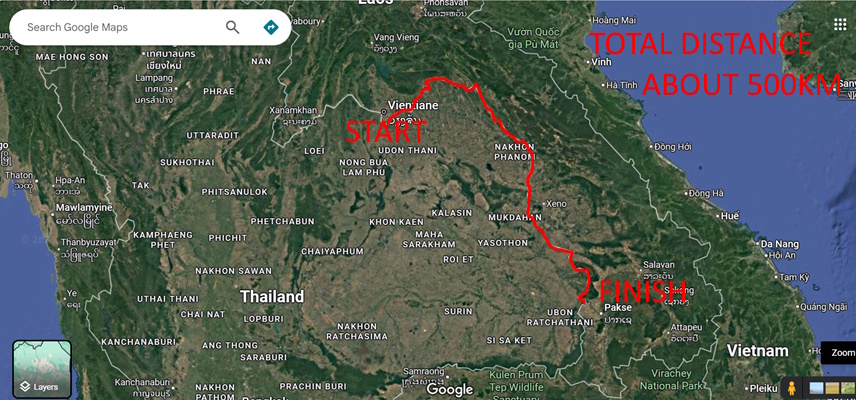
Mekong Expedition 2026

MekongExpedition2026

GALLERY

*Click the link above GALLERY for the YOUTUBE video PLAYLIST* Photos, videos, and recent updates from the raft build and river trials. See videos below.

Cover photo Sorry, your browser doesn't support embedded videos.

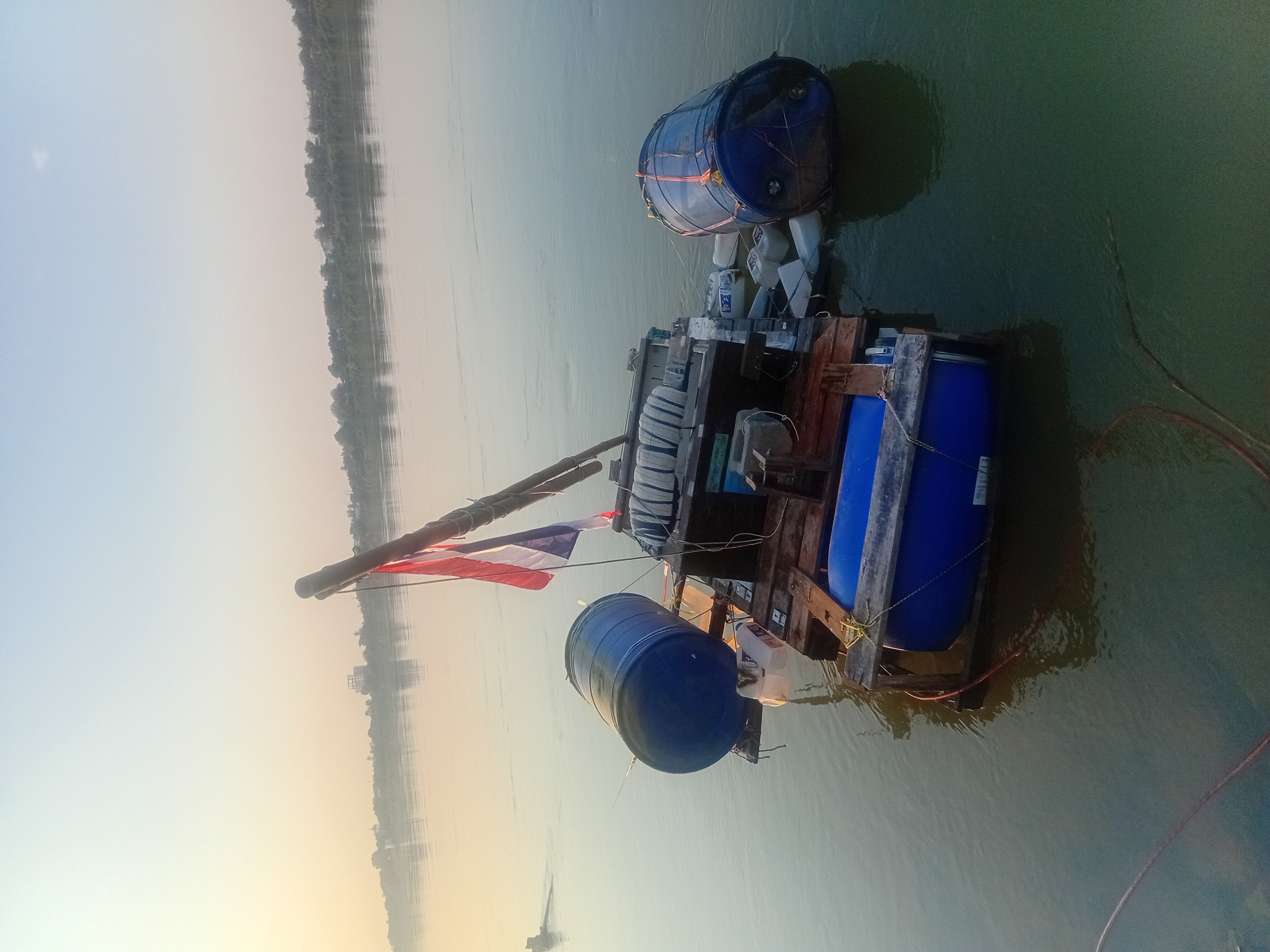
Mekong Raft Vid1 – Driftwood Build & River Trial (Jan 2026)

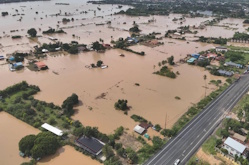
Testing the makeshift driftwood raft after Nong Khai floods. Basic tools only – saw & old drill!

Thai-Laos Friendship Bridge – Vientiane

Exploring the Thai-Laos Friendship Bridges along the Mekong – starting point context for the expedition.

Gallery photo 1 Gallery photo 2 Gallery photo 3 Gallery photo 4 Gallery photo 5 Gallery photo 6

Critical Thinking

Critical Thinking vs. Passive Thinking

Critical Thinking vs. Passive Thinking

Understanding the difference between active, analytical reasoning and passive acceptance of information

What is Critical Thinking?

Critical thinking is a cognitive process that involves the deliberate, systematic, and reflective evaluation of information, arguments, and ideas to form well-reasoned judgments and decisions. It is not merely about being skeptical or critical in a negative sense but rather about engaging with content in a disciplined way to determine its validity, relevance, and implications.

At its essence, critical thinking is the ability to think clearly and rationally about what to believe or what to do. It emphasizes intellectual standards such as clarity, accuracy, precision, consistency, relevance, sound evidence, good reasons, depth, breadth, and fairness. Unlike passive thinking, which accepts information at face value, critical thinking is active and purposeful.

Critical Thinking

Active, analytical, and reflective thinking

Goal

Making reasoned judgments and evaluating evidence through systematic analysis and reflection.

Information Processing

Analyzing, questioning, and synthesizing information to understand relationships, verify credibility, and distinguish between verifiable evidence and opinions.

Key Skills

Analysis, evaluation, inference, problem-solving, observation, explanation, self-regulation, and decision-making based on reasoned criteria.

Attitude Towards Problems

Proactive and solution-oriented, seeking to identify root causes and develop well-reasoned solutions through systematic inquiry.

Impact on Decision Making

Enhancing clarity and reducing errors by weighing options against reasoned criteria, cross-verifying facts, and considering alternative perspectives.

Common Biases

Confirmation bias, overconfidence, and anchoring. Critical thinkers actively work to identify and overcome these through metacognition and self-regulation.

Long-Term Outcomes

Better decision-making, personal growth, adaptability, resilience, and success in professional and personal endeavors.

Passive Thinking

Accepting information without questioning or analysis

Goal

Avoiding effort and maintaining comfort by accepting information without challenging it or engaging in deep analysis.

Handles Information

Accepting information at face value without verifying sources, checking for biases, or considering alternative viewpoints.

Key Skills

Limited to basic recall and recognition. Minimal engagement with analysis, evaluation, or synthesis of information.

Attitude Towards Problems

Avoidant and reactive, often relying on intuition, authority, or established habits rather than systematic problem-solving.

Impact on Decision Making

Increasing errors and missed opportunities due to rushed decisions, incomplete analysis, and failure to consider consequences.

Common Biases

Availability heuristic, bandwagon effect, and status quo bias. These biases go unchallenged due to lack of reflective analysis.

Long-Term Outcomes

Stagnation, vulnerability to manipulation, poor decision-making, and limited personal or professional growth.

Core Elements of Critical Thinking

Critical thinking comprises several interconnected elements that guide the thinking process:

1. Purpose

Every act of critical thinking has a goal or objective. Understanding why you're evaluating information helps guide the inquiry process, whether it's to solve a problem, make a decision, or understand a concept.

2. Question at Issue

Identifying the central problem or query is fundamental. Critical thinkers formulate precise questions to guide their inquiry, such as "What evidence supports this claim?" or "What are the underlying assumptions?"

3. Information

Gathering relevant data, facts, observations, or experiences is crucial. This involves distinguishing between verifiable evidence and opinions, and assessing the quality and source of the information.

4. Concepts

The theories, definitions, axioms, or principles that frame the thinking. Critical thinkers clarify key concepts to avoid ambiguity, ensuring everyone understands terms in the same way.

5. Assumptions

Unstated beliefs taken for granted can introduce bias. A key aspect of critical thinking is surfacing and questioning these assumptions to ensure they're valid and appropriate.

6. Inferences and Interpretations

Drawing logical conclusions from evidence requires distinguishing between valid deductions (what must be true) and inferences (what might be true based on available information).

7. Implications and Consequences

Considering the potential outcomes of a belief or action is essential. What follows if this is true? What are the short-term and long-term effects?

8. Point of View

Recognizing the perspective from which information is presented, including one's own biases, and considering alternative viewpoints for a balanced analysis.

The Process of Critical Thinking

Critical thinking follows an iterative process that can be refined over time:

  • Identify the issue or claim that needs evaluation
  • Gather and organize relevant information from reliable sources
  • Analyze the data for patterns, contradictions, or gaps
  • Evaluate arguments using criteria like logic, evidence, and potential bias
  • Synthesize insights to form a well-reasoned conclusion
  • Reflect on the process and refine your approach if necessary

Importance and Benefits

Critical thinking is essential in an era of information overload, misinformation, and complex global challenges. It empowers individuals to:

  • Make informed decisions in personal life, such as financial choices or health advice
  • Excel in professional settings, from debugging code to developing business strategies
  • Contribute to society by fostering civil discourse, innovation, and ethical behavior
  • Avoid manipulation in advertising, politics, or scams
  • Adapt to change and demonstrate resilience in challenging situations

Research shows that strong critical thinkers are more adaptable, resilient, and successful in their endeavors.

Examples in Practice

  • Scientific Research: A biologist questions a study's methodology, replicates experiments, and evaluates alternative explanations before accepting findings.
  • Everyday Decision-Making: When buying a car, you analyze reviews, compare specifications, weigh pros and cons against your needs, and ignore marketing hype.
  • Ethical Dilemmas: In debating complex issues, you examine legal, moral, and practical arguments while considering cultural perspectives and potential societal impacts.
  • Media Consumption: Spotting fake news by verifying sources, checking for confirmation bias, and seeking diverse viewpoints before forming conclusions.

Barriers and Challenges

Despite its value, critical thinking can be hindered by several factors:

  • Cognitive Biases: Confirmation bias, anchoring, and other mental shortcuts that cloud judgment
  • Emotional Influences: Fear, anger, or groupthink that override rational analysis
  • Lack of Information: Incomplete data leading to flawed conclusions
  • Time Constraints: Rushed decisions that bypass thorough analysis
  • Educational Gaps: Insufficient training in critical thinking skills, leading to reliance on intuition or authority

Overcoming these barriers requires metacognition (thinking about thinking) and developing habits such as reflective journaling or actively seeking feedback on your reasoning.

Conclusion

Critical thinking is a multifaceted, disciplined approach to reasoning that enhances clarity, accuracy, and effectiveness in thought and action. It's not an innate ability but a skill set developed through practice and dedication. By engaging thoughtfully with information, questioning assumptions, and considering multiple perspectives, anyone can become a more effective critical thinker.

The contrast between critical thinking and passive thinking highlights the importance of active engagement with information. While passive thinking may seem easier in the short term, it leads to poor decisions, vulnerability to manipulation, and missed opportunities for growth. Critical thinking, though more demanding, results in better outcomes, personal development, and the ability to navigate an increasingly complex world with confidence and clarity.

© 2025 Critical Thinking Resource | Anti Sheeple Society

Learn More About Critical Thinking

Page 2 of 3

  • 1
  • 2
  • 3